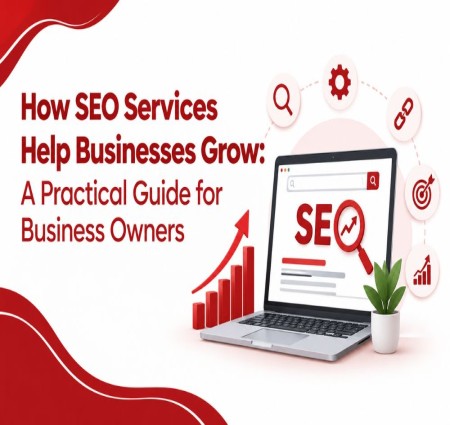
How SEO Services Help Businesses Grow: A Practical Guide for Business Owners Many business owners ask a simple question: "Will SEO actually help my business get more customers?" The answer depends on how SEO is planned and implemented. SEO is not simply about getting a website to appear higher on Google. A successful SEO strategy should help the right people discover a business when they are actively searching for its products, services, information, or solutions. I'm Manoj Negi, an SEO professional and consultant with more than 14 years of experience since 2009. Over the years, I have worked with businesses across education, healthcare, eCommerce, SaaS, manufacturing, professional services, startups, and other industries. My approach to SEO focuses on connecting search visibility with meaningful business outcomes such as qualified traffic, enquiries, leads, conversions, and long-term online authority. SEO Starts With Understanding the Business One of the biggest mistakes businesses make is starting SEO with a list of keywords without first understanding what the business actually needs. Before selecting keywords or creating content, I look at the business model, target audience, competitors, existing website, search demand, customer intent, and growth objectives. For example, a local healthcare business may need stronger Google Business Profile visibility, location-focused pages, reviews, local content, and Local SEO. An eCommerce business may have different requirements, including category architecture, product pages, internal linking, technical SEO, structured data, and useful buying guides. A SaaS company may benefit from content around problems, use cases, comparisons, features, solutions, and product-led search opportunities. This is why I believe SEO strategies should be customized rather than copied from one website to another. What Does a Practical SEO Strategy Include? A strong SEO foundation normally involves several connected areas. Technical SEO helps search engines crawl, understand, and index a website effectively. Website architecture, mobile usability, page performance, indexation, internal links, and structured data can all be important parts of the technical foundation. Search intent and keyword research help identify what potential customers are actually looking for. The goal is not simply to target keywords with high search volume but to understand the purpose behind those searches. Content optimization focuses on creating useful information that answers genuine customer questions and supports different stages of the buying journey. Topical authority helps a website demonstrate depth around an important subject rather than publishing isolated articles without a clear relationship. Local SEO can be important for businesses serving specific locations. Google Business Profile optimization, local pages, citations, reviews, local content, and other relevant signals can support local visibility. Authority building and digital PR can strengthen a website's credibility through relevant mentions, relationships, useful resources, and quality references. These activities work together. Improving only one part while ignoring the rest may limit the overall effectiveness of an SEO strategy. Why Rankings Alone Are Not Enough A business can rank for keywords and still struggle to generate enquiries. For me, this is one of the most important lessons from working in SEO. A website should attract the right audience, communicate value clearly, provide useful information, build trust, and make it easy for visitors to take the next step. For example, ranking for a broad informational keyword may bring traffic but not necessarily customers. A more specific, high-intent search may have fewer searches but could be much more relevant to a business. This is why I focus on the relationship between search intent, content quality, website experience, visibility, and business outcomes. SEO should support the business rather than becoming a vanity exercise based only on rankings. SEO Is Also Changing With AI-Powered Search Search behaviour continues to evolve. Alongside traditional Google search, businesses are increasingly considering AI-powered search experiences and platforms. My work also includes AI SEO, Generative Engine Optimization (GEO), and Answer Engine Optimization (AEO). The foundation remains strong SEO: useful content, technical accessibility, clear information, expertise, trust, structured content, and authoritative signals. The objective is not to find a shortcut to appear in an AI platform. Instead, businesses should make their information clear, credible, understandable, and easy for modern search systems to interpret. There is also no guaranteed method for forcing a website or brand to appear in every AI-generated answer. How Long Does SEO Take? SEO is generally a continuous process rather than a one-time activity. The timeframe can vary depending on the website's existing condition, competition, industry, content quality, authority, technical issues, and the level of work required. The first stage is usually understanding the current situation through research and an SEO audit. Next comes the development of technical, content, keyword, authority, and optimization priorities. As improvements are implemented, performance can be monitored and the strategy adjusted based on data and changing opportunities. This is why I recommend thinking about SEO as a long-term investment rather than expecting instant results from a few optimizations. Choosing the Right SEO Approach for Your Business If you are considering SEO, start by asking what you actually want SEO to accomplish. Do you need more qualified website visitors? Are you looking for more enquiries? Do you want stronger Google Maps visibility? Are important service pages not receiving organic traffic? Has your website experienced a decline in search visibility? Do you need a stronger content and topical authority strategy? The answers help determine where SEO work should begin. My approach is based on understanding these business requirements first and then building an SEO strategy around them. I believe effective SEO should be ethical, transparent, user-focused, technically strong, and connected to real business objectives. The goal is not simply to make a website rank. The goal is to help the right audience discover the business, understand its value, trust its expertise, and take meaningful action.
Read Full Blog