
Blog by Trusted Electrical & Electronic Components Manufacturer In India | Digital Diary
" To Present local Business identity in front of global market"

Scan QR code to visit our website
" To Present local Business identity in front of global market"
Scan QR code to visit our website
 Digital Diary Submit Post
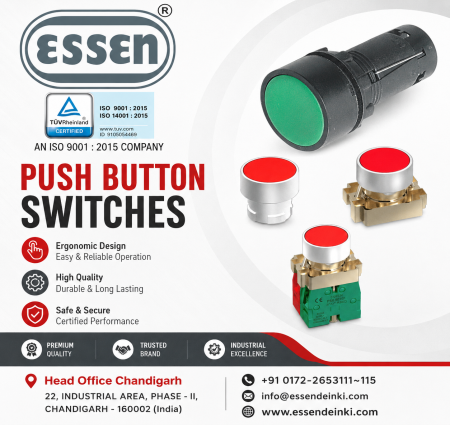 Push button switches are essential components in electrical and industrial control systems. From starting motors and controlling machinery to operating home appliances, these switches provide a simple and reliable method of controlling electrical circuits. Understanding a push button switch diagram helps technicians, engineers, and students correctly install, troubleshoot, and maintain electrical...
Read More
Push button switches are essential components in electrical and industrial control systems. From starting motors and controlling machinery to operating home appliances, these switches provide a simple and reliable method of controlling electrical circuits. Understanding a push button switch diagram helps technicians, engineers, and students correctly install, troubleshoot, and maintain electrical...
Read More
Push button switches are essential components in electrical and industrial control systems. From starting motors and controlling machinery to operating home appliances, these switches provide a simple and reliable method of controlling electrical circuits. Understanding a push button switch diagram helps technicians, engineers, and students correctly install, troubleshoot, and maintain electrical systems.
A push button switch is an electromechanical device that controls the flow of electricity in a circuit when pressed. These switches are available in Normally Open (NO), Normally Closed (NC), illuminated, emergency stop, and latching configurations, making them suitable for a wide range of industrial and commercial applications.
In a Normally Open switch, the circuit remains disconnected until the button is pressed.
+V | | [ NO ] Push Button | | (Lamp) | | 0V
How it works: When the button is pressed, the contacts close and current flows through the load. Releasing the button opens the circuit again.
In a Normally Closed switch, the circuit remains connected until the button is pressed.
+V | | [ NC ] Push Button | | (Motor) | | 0V
How it works: Pressing the button breaks the circuit and stops current flow.
One of the most common applications of push button switches is motor control.
L | +----[STOP NC]----[START NO]----(Contactor Coil) | | |----------[Aux NO Contact]---------| | N
Many industrial control panels use illuminated push buttons to indicate machine status.
L | +----[Push Button NO]----(Load) | +------------------------(LED Indicator) | N
Emergency Stop (E-Stop) switches are critical safety devices used in industrial environments.
L | [ E-STOP NC ] | | (Machine Control Circuit) | N
The E-Stop switch remains closed during normal operation. Pressing the emergency button immediately interrupts the control circuit and shuts down the machine.
Dual push button stations are commonly used where both start and stop functions are required.
+----[START NO]----+ L --------+ +----(Motor) +----[STOP NC]-----+ | N
Understanding the internal components helps explain how push button switches operate.
┌───────────┐ │ Actuator │ └─────┬─────┘ │ Spring │ ┌─────┴─────┐ │ Contacts │ └─────┬─────┘ │ Terminal
A typical industrial control panel may contain multiple push buttons and indicators.
┌─────────────────────────┐ │ START STOP RESET │ │ [G] [R] [B] │ │ │ │ Power ON Indicator │ └─────────────────────────┘
When selecting a push button switch, consider:
Push button switches are among the most widely used control devices in electrical and automation systems. Understanding different push button switch diagrams-including NO, NC, Start-Stop, and Emergency Stop circuits-helps ensure proper installation, troubleshooting, and safe operation. Whether used in industrial control panels or commercial equipment, high-quality push button switches provide dependable control and long-term reliability.
Read Full Blog...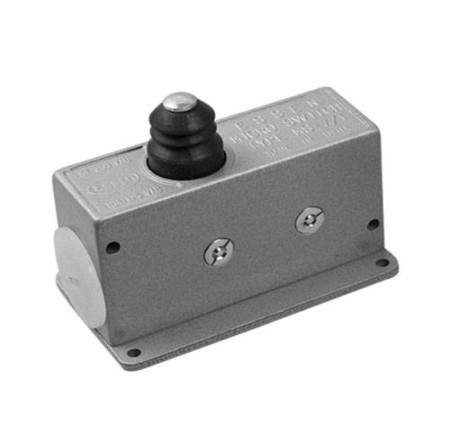 Micro limit switches are essential electromechanical devices that detect the physical presence or absence of objects in smart manufacturing. By providing precise, reliable feedback to control systems, Essen Deinki micro limit switches enable automated machinery to operate safely, reduce downtime, and seamlessly integrate into 2026's advanced industrial networks. Industrial automation relies he...
Read More
Micro limit switches are essential electromechanical devices that detect the physical presence or absence of objects in smart manufacturing. By providing precise, reliable feedback to control systems, Essen Deinki micro limit switches enable automated machinery to operate safely, reduce downtime, and seamlessly integrate into 2026's advanced industrial networks. Industrial automation relies he...
Read More
Micro limit switches are essential electromechanical devices that detect the physical presence or absence of objects in smart manufacturing. By providing precise, reliable feedback to control systems, Essen Deinki micro limit switches enable automated machinery to operate safely, reduce downtime, and seamlessly integrate into 2026's advanced industrial networks.
Industrial automation relies heavily on precise data collection and movement control. Manufacturing facilities require components that consistently monitor machinery position and part alignment to prevent catastrophic system failures. A single sensor malfunction can halt an entire production line, costing thousands of dollars per minute in lost productivity.
This operational demand is exactly why the micro limit switch remains a foundational technology in modern manufacturing. These compact devices offer highly accurate position sensing that complex digital systems depend on to function. Essen Deinki designs micro limit switches that handle millions of operational cycles under severe industrial conditions.
Understanding how these components function within modern programmable logic controllers (PLCs) allows facility managers to optimize their assembly lines. The physical durability of these switches bridges the gap between heavy mechanical operations and delicate digital control systems.
This article explores the specific roles micro limit switches play in 2026, how they compare to alternative sensing technologies, and why selecting the right switch directly impacts factory output.
Smart factories require physical confirmation that a mechanical action has occurred. A micro limit switch provides this verification by physically contacting a moving machine part or product. When an object pushes the switch actuator, the internal electrical contacts change state, sending a direct signal to the machine's control system.
Essen Deinki micro limit switches offer a distinct advantage over non-contact sensors because they operate reliably in environments filled with heavy dust, oil, and electromagnetic interference. While optical sensors might fail when covered in grease, a mechanical micro limit switch physically pushes through the contamination to register the physical contact. This tangible mechanical action guarantees that the PLC receives accurate positioning data regardless of the ambient environmental conditions.
The industrial internet of things (IIoT) requires constant data streams from the factory floor. While a micro limit switch is inherently a simple binary device (registering either on or off), modern automation networks use these exact signals to track long-term machine health.
When a central control system records a fractional delay in the micro limit switch actuation time, the predictive maintenance software flags a potential mechanical jam before a total machine failure occurs. Essen Deinki micro limit switches provide the crisp, bounce-free electrical signals required by these high-speed diagnostic systems. The reliable signal generated by the micro limit switch ensures that the AI-driven analytics software receives clean data, preventing false alarms and unnecessary maintenance shutdowns.
Machine safety and continuous operation dictate production efficiency. Engineers integrate the micro limit switch into safety interlocks, ensuring heavy machinery cannot operate while safety guards remain open. This direct mechanical feedback loop prevents workplace injuries and expensive equipment damage.
Essen Deinki micro limit switches also control the precise travel limits of robotic arms and conveyor belts. By establishing exact stopping points, these switches prevent mechanical overtravel. The physical durability of Essen Deinki components means these switches endure repetitive impacts without losing calibration. Consequently, maintenance teams spend less time realigning sensors and more time optimizing other areas of the manufacturing process.
Engineers frequently evaluate whether to use a micro limit switch or a solid-state proximity sensor for a specific factory application.
Choose an Essen Deinki micro limit switch if your environment contains heavy particulate matter, liquid splashing, or strong magnetic fields that typically confuse electronic sensors. Micro limit switches also handle higher electrical loads directly, eliminating the need for secondary relay systems in simpler machine circuits.
Choose a proximity sensor only if the target object is too fragile to touch, or if the machine requires operating speeds exceeding standard mechanical switch capabilities. For the vast majority of heavy industrial applications in 2026, the micro limit switch provides superior reliability, easier physical alignment, and vastly simpler electrical troubleshooting.
Upgrading your sensor technology directly impacts your manufacturing reliability. The micro limit switch continues to serve as the dependable bridge between physical machine movement and digital control systems. By prioritizing high-quality components from manufacturers like Essen Deinki, facility managers reduce maintenance overhead and maximize equipment uptime.
Evaluate your current assembly lines to identify where durable electromechanical switches can replace failing proximity sensors. Document the specific environmental hazards in your facility, and consult with industrial automation specialists to specify the correct Essen Deinki micro limit switch for your exact operational requirements.
A high-quality micro limit switch typically lasts between 10 million and 20 million mechanical operations. The exact lifespan depends heavily on the operating environment, the electrical load applied to the internal contacts, and the physical force exerted on the external actuator.
Technicians troubleshoot a micro limit switch by first visually inspecting the actuator for physical damage or debris buildup. Next, the technician uses a standard multimeter to test for electrical continuity across the switch terminals while manually depressing the actuator. This confirms whether the internal contacts open and close properly.
Essen Deinki micro limit switches primarily serve in CNC machinery, packaging equipment, automated conveyor systems, and safety door interlocks. These switches detect part presence, control machine stroke limits, and act as mandatory safety stops in automated industrial equipment.
Yes. Modern programmable logic controllers seamlessly read the electrical signals generated by micro limit switches. The clean, on/off binary signal provided by the switch requires very little processing power, making it an ideal input for high-speed industrial control systems.