Push Button Switch Diagram: Complete Guide to Wiring Working Principle and Applications
꧁ Digital Diary ༒Largest Writing Community༒꧂

꧁ Digital Diary ༒Largest Writing Community༒꧂
Scan QR code to visit our website

Push button switches are essential components in electrical and industrial control systems. From starting motors and controlling machinery to operating home appliances, these switches provide a simple and reliable method of controlling electrical circuits. Understanding a push button switch diagram helps technicians, engineers, and students correctly install, troubleshoot, and maintain electrical systems.
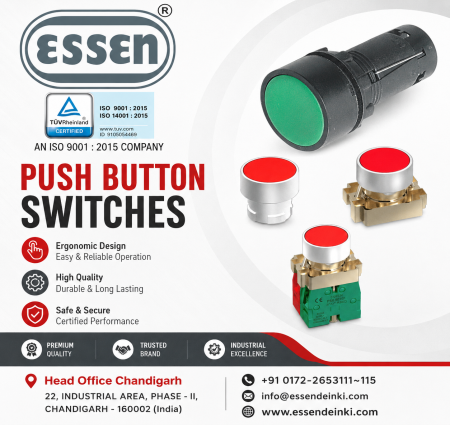
A push button switch is an electromechanical device that controls the flow of electricity in a circuit when pressed. These switches are available in Normally Open (NO), Normally Closed (NC), illuminated, emergency stop, and latching configurations, making them suitable for a wide range of industrial and commercial applications.
In a Normally Open switch, the circuit remains disconnected until the button is pressed.
+V | | [ NO ] Push Button | | (Lamp) | | 0V
How it works: When the button is pressed, the contacts close and current flows through the load. Releasing the button opens the circuit again.
In a Normally Closed switch, the circuit remains connected until the button is pressed.
+V | | [ NC ] Push Button | | (Motor) | | 0V
How it works: Pressing the button breaks the circuit and stops current flow.
One of the most common applications of push button switches is motor control.
L | +----[STOP NC]----[START NO]----(Contactor Coil) | | |----------[Aux NO Contact]---------| | N
Many industrial control panels use illuminated push buttons to indicate machine status.
L | +----[Push Button NO]----(Load) | +------------------------(LED Indicator) | N
Emergency Stop (E-Stop) switches are critical safety devices used in industrial environments.
L | [ E-STOP NC ] | | (Machine Control Circuit) | N
The E-Stop switch remains closed during normal operation. Pressing the emergency button immediately interrupts the control circuit and shuts down the machine.
Dual push button stations are commonly used where both start and stop functions are required.
+----[START NO]----+ L --------+ +----(Motor) +----[STOP NC]-----+ | N
Understanding the internal components helps explain how push button switches operate.
┌───────────┐ │ Actuator │ └─────┬─────┘ │ Spring │ ┌─────┴─────┐ │ Contacts │ └─────┬─────┘ │ Terminal
A typical industrial control panel may contain multiple push buttons and indicators.
┌─────────────────────────┐ │ START STOP RESET │ │ [G] [R] [B] │ │ │ │ Power ON Indicator │ └─────────────────────────┘
When selecting a push button switch, consider:
Push button switches are among the most widely used control devices in electrical and automation systems. Understanding different push button switch diagrams-including NO, NC, Start-Stop, and Emergency Stop circuits-helps ensure proper installation, troubleshooting, and safe operation. Whether used in industrial control panels or commercial equipment, high-quality push button switches provide dependable control and long-term reliability.
We are accepting Guest Posting on our website for all categories.


Trusted Electrical & Electronic Components Manufacturer In India
@DigitalDiaryWefru