Blog by CryptoAPE | Digital Diary
" To Present local Business identity in front of global market"
Digital Diary Submit Post
Blockchain adoption is no longer limited to early adopters or niche technology firms. Today, startups, enterprises, and digital-first businesses are actively exploring blockchain-based platforms to improve transparency, automation, and user trust. As the New Year begins, CryptoApe has introduced a limited-period initiative that reduces the cost barrier to blockchain development by offering up to 5...
Read More
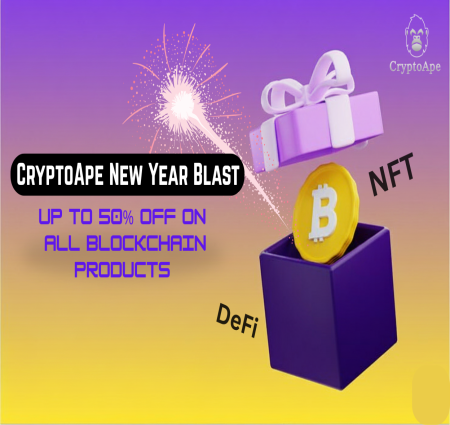
Blockchain adoption is no longer limited to early adopters or niche technology firms. Today, startups, enterprises, and digital-first businesses are actively exploring blockchain-based platforms to improve transparency, automation, and user trust. As the New Year begins, CryptoApe has introduced a limited-period initiative that reduces the cost barrier to blockchain development by offering up to 50% off across its blockchain product ecosystem.
Rather than positioning this as a sales-driven campaign, it's better understood as an opportunity for businesses to evaluate, build, or scale blockchain solutions at a lower financial risk. This article explores what the New Year Blast includes, who it may be relevant for, and how organizations can approach blockchain development more strategically in the coming year.
The New Year Blast is structured around accessibility. Blockchain development often involves significant upfront investment-particularly for platforms such as crypto exchanges, DeFi applications, or NFT marketplaces. By reducing development costs, CryptoApe aims to make experimentation and deployment more practical for a wider range of businesses.
From a technology standpoint, the offer applies to both pre-built blockchain frameworks and custom development services, allowing flexibility based on business size, industry, and technical requirements.
Blockchain technology has steadily moved from experimentation to implementation. Several factors are contributing to this shift:
Increased demand for decentralized financial systems
Growing focus on data ownership and transparency
Expansion of Web3 applications beyond cryptocurrency
Maturing regulatory clarity in multiple regions
As organizations look to modernize digital infrastructure, blockchain-based systems are being evaluated for long-term scalability rather than short-term trends.
Crypto exchange platforms remain one of the most widely adopted blockchain use cases. These platforms facilitate digital asset trading while integrating security protocols, liquidity mechanisms, and compliance tools.
From an informational perspective, modern crypto exchange software typically includes:
Order matching engines
Secure wallet infrastructure
Risk management controls
User authentication and compliance layers
Lower development costs can make it easier for businesses to test exchange models without committing to large capital expenditures.
Decentralized finance applications operate through smart contracts rather than centralized intermediaries. DeFi platforms support use cases such as decentralized trading, lending, staking, and yield mechanisms.
For businesses researching DeFi adoption, key considerations often include:
Smart contract reliability
On-chain transparency
User interface simplicity
Network scalability
The New Year cost reduction allows teams to prototype and deploy DeFi products with measured financial exposure.
NFT marketplaces support digital ownership verification across sectors such as gaming, media, ticketing, and digital collectibles. Beyond art-focused platforms, NFTs are increasingly being explored for utility-driven applications.
Typical NFT marketplace features include:
Token minting functionality
Creator royalty mechanisms
Wallet integrations
Multi-chain compatibility
For organizations evaluating NFT-based models, reduced development costs can support market testing before large-scale rollout.
Web3 applications focus on decentralization, peer-to-peer interaction, and user-controlled data. These applications often integrate blockchain, smart contracts, and decentralized storage systems.
Common Web3 use cases include:
DAO governance platforms
Decentralized identity systems
Blockchain-based gaming environments
Token-powered communities
From a strategic viewpoint, Web3 development aligns with long-term shifts toward user-centric digital ecosystems.
Smart contracts form the operational backbone of blockchain platforms. Errors or vulnerabilities in these contracts can lead to significant risks, making development and auditing equally important.
Smart contract services typically involve:
Business logic translation into code
Security-focused development practices
Automated testing
Independent auditing processes
Lower entry costs can help teams prioritize security without compromising budgets.
Startups exploring blockchain ideas can use the New Year initiative to validate concepts before seeking additional funding.
Mid-sized firms planning to integrate blockchain features into existing platforms may find the reduced development cost beneficial.
Larger organizations assessing blockchain for operational efficiency or transparency can approach pilot projects with lower financial exposure.
Before moving forward with any blockchain project, businesses should consider:
Clear problem definition and use case relevance
Target users and adoption strategy
Regulatory and compliance requirements
Long-term maintenance and scalability
Cost savings are most effective when paired with thoughtful planning and realistic implementation goals.
Launching or upgrading blockchain platforms early in the year allows organizations to:
Align technical development with annual business goals
Allocate resources more effectively
Conduct phased testing and improvements
Respond faster to market feedback
From a planning perspective, timing can be as important as technology choice.
The CryptoApe New Year Blast provides a practical opportunity for businesses to approach blockchain development with reduced financial risk. By lowering cost barriers across multiple blockchain products, it enables experimentation, planning, and implementation in a more controlled and strategic manner.
For organizations considering crypto platforms, DeFi systems, NFT marketplaces, or Web3 applications, the New Year presents a natural checkpoint to evaluate technology direction. When approached thoughtfully, blockchain development can support long-term digital growth rather than short-term experimentation.
Curious to see how a blockchain solution would actually work for your business use case?
Request a free demo to explore the platform's core features, user flow, and technical capabilities in a practical, no-obligation walkthrough. This helps you evaluate functionality, scalability, and real-world applicability before making any development decisions.
The initiative covers a broad range of blockchain solutions, including crypto exchange platforms, DeFi applications, NFT marketplaces, Web3 applications, and smart contract development services.
Yes. The reduced development cost can help beginners explore blockchain use cases without committing to large upfront investments.
In most cases, both customizable frameworks and fully tailored blockchain solutions are included, depending on project scope and requirements.
Cost reductions are related to seasonal pricing, not reduced technical standards. Quality, security, and scalability considerations remain essential.
Starting early in the year allows for better planning, phased deployment, and alignment with long-term business objectives.
Read Full Blog...
Decentralized finance has evolved significantly since the early days of crypto swaps and liquidity pools. In 2026, decentralized exchanges (DEXs) are no longer experimental products-they are essential infrastructure within the Web3 ecosystem. As more businesses explore DeFi opportunities, one concept continues to surface: the Uniswap Clone Script. Rather than building a decentralized exchange enti...
Read More
Decentralized finance has evolved significantly since the early days of crypto swaps and liquidity pools. In 2026, decentralized exchanges (DEXs) are no longer experimental products-they are essential infrastructure within the Web3 ecosystem. As more businesses explore DeFi opportunities, one concept continues to surface: the Uniswap Clone Script.
Rather than building a decentralized exchange entirely from scratch, many teams are choosing structured, open-source-based frameworks that reduce complexity while maintaining flexibility. This article explains what a Uniswap Clone Script is, how it functions, and why it continues to be relevant in 2026-without hype or sales language.
A Uniswap Clone Script is a pre-built decentralized exchange framework inspired by Uniswap's automated market maker (AMM) model. It includes the core smart contract logic required for token swaps, liquidity pools, and decentralized trading-while allowing developers to modify features based on specific use cases.
Importantly, it does not mean copying Uniswap line by line. Instead, it refers to using a similar architectural approach built on open-source principles, which developers can extend or adapt for new blockchain networks, governance models, or liquidity strategies.
In practice, this approach helps teams avoid rebuilding foundational DeFi mechanics that are already well understood and battle-tested.
To understand its usefulness, it helps to look at how this system functions technically.
Automated Market Maker (AMM):
Trades are executed using mathematical formulas rather than order books.
Liquidity Pools:
Users provide token pairs to pools, enabling swaps and earning transaction fees.
Smart Contracts:
All logic-pricing, swaps, and rewards-is handled by self-executing blockchain code.
Wallet-Based Interaction:
Users connect non-custodial wallets, retaining control over their assets.
This architecture reduces reliance on intermediaries and increases transparency, which remains a central goal of decentralized finance.
By 2026, decentralized exchanges are part of mainstream crypto activity. AMM-based models like Uniswap's have demonstrated long-term viability, handling high trading volumes across multiple market cycles. Using a Uniswap Clone Script allows builders to rely on proven mechanics rather than untested ideas.
Building a DEX from the ground up requires deep expertise in smart contracts, security audits, front-end integration, and ongoing maintenance. A Uniswap Clone Script reduces redundant engineering work while still allowing teams to implement custom logic, governance rules, or token economics.
Today's Uniswap Clone Software often supports:
EVM-compatible blockchains
Layer 2 scaling solutions
Reduced gas-fee environments
Modular smart contract upgrades
This adaptability matters as blockchain ecosystems continue to fragment and specialize.
Many vulnerabilities in DeFi arise from experimental designs. Clone-based frameworks rely on patterns that have been audited, tested, and improved over time. While audits are still essential, starting from known structures lowers baseline risk.
Uniswap Clone Scripts are now used in more focused and purpose-driven environments rather than generic exchanges.
Common examples include:
Token swap platforms for specific ecosystems
Liquidity hubs for gaming or NFT economies
Private or semi-permissioned DeFi platforms
DAO-governed trading protocols
Cross-chain liquidity applications
These use cases show how the model continues to evolve beyond simple token swaps.
From a practical standpoint, a Uniswap Clone Script helps teams address several real-world challenges:
Shorter development timelines
Lower initial engineering costs
Easier protocol upgrades
Faster testing and iteration
Improved focus on user experience and liquidity design
This allows teams to concentrate on differentiation rather than foundational mechanics.
While useful, clone-based development is not a shortcut to success.
Considerations include:
Smart contracts still require independent audits
Liquidity strategy is critical and non-trivial
UI/UX design strongly impacts adoption
Governance models must be thoughtfully designed
Understanding these limitations helps set realistic expectations.
In 2026, the value of a Uniswap Clone Script lies in its practicality. It offers a stable, flexible foundation for decentralized exchange development without forcing teams to reinvent proven DeFi mechanisms.
For builders focused on long-term sustainability, security, and adaptability, clone-based frameworks remain a logical starting point-not because they are easy, but because they are efficient and well-understood.
Understanding how and why they work is the first step toward making informed decisions in the evolving DeFi landscape.
A Uniswap Clone Script is a customizable decentralized exchange framework based on Uniswap's AMM architecture, used to build DEX platforms efficiently.
Yes. Its underlying AMM model remains widely used and adaptable to modern blockchain networks and scaling solutions.
It provides a pre-tested foundation, reducing development time and technical risk while allowing customization.
Most modern implementations are designed for multi-chain compatibility and Layer 2 integration.
No. Innovation typically happens in governance, liquidity models, integrations, and user experience rather than core swap mechanics.
Read Full Blog...
The cryptocurrency exchange landscape is packed with ambition, but not every platform survives long enough to gain user trust. New exchanges launch regularly, yet many exit early due to development complexity, liquidity issues, compliance pressure, and security incidents. The pattern repeats often enough that founders naturally ask: Is there a more sustainable way to launch without repeating the s...
Read More
The cryptocurrency exchange landscape is packed with ambition, but not every platform survives long enough to gain user trust. New exchanges launch regularly, yet many exit early due to development complexity, liquidity issues, compliance pressure, and security incidents. The pattern repeats often enough that founders naturally ask:
Is there a more sustainable way to launch without repeating the same failures?
One approach gaining credibility is beginning with a Coinbase Clone Script - not to shortcut innovation, but to remove the heavy technical lift of building every feature from zero. When the foundation is stable, teams can invest their efforts where survival actually depends: liquidity, compliance, scalability, and long-term trust.
After observing trends across exchange launches, failures generally stem from a few recurring problems:
Building a full trading platform - matching engines, wallet systems, UI/UX layers, blockchain integration - can stretch into a year or more. By the time a product is ready, market momentum or funding may already be gone.
Even small vulnerabilities can cause asset theft, personal data exposure, or API exploitation. A lack of hardened wallet management is often the first point of failure.
Traders avoid empty markets. No orders means no activity, and no activity means users leave. Many early platforms launch before solving liquidity flow.
A crypto exchange is more than code - it's a financial environment. Licensing, AML/KYC, audit-ready logs, and cross-border regulations take time, and many startups stall here.
Teams that spend everything on engineering rarely have enough left for liquidity partnerships, security audits, user education, and long-term development.
A Coinbase Clone Script cannot guarantee success, but it can remove several early risk points. Instead of building complex fundamentals from scratch, founders start from an already structured base. This allows the product to move faster and more confidently through early growth stages.
Where it makes a practical difference:
It shortens development time significantly
Core structure is already audited and tested
Liquidity integrations are typically simpler
Compliance frameworks like KYC/AML are pre-aligned
Teams can allocate budget to scaling instead of re-engineering
The goal isn't to copy; it's to build on top of something proven.
Most Coinbase Clone Software setups offer a foundational architecture designed for extension, branding, liquidity scaling, compliance work, and regional expansion. It is not limited to UI design - it spans wallet logic, trading engine mechanics, and administrative monitoring tools.
Multi-signature wallet controls
Cold + hot storage split for risk minimization
Identity and transaction monitoring
Layered authentication systems
Real-time matching algorithms
Limit and market order execution
Market depth visibility and charting tools
Fee configuration for platform economics
Simple onboarding flow for beginners
Mobile adaptability and Coinbase Clone App compatibility
Notification-based account alerts
Support for fiat gateways or payment rails
KYC/AML verification layers
Dispute resolution modules
Audit-friendly transaction logs
Policy-driven access controls
These components form a foundation - innovation happens above this layer.
Why do new exchanges shut down early?
Most fail due to security weaknesses, liquidity limitations, long development cycles, regulatory friction, and resource exhaustion.
How does a Coinbase Clone Script help?
It supplies exchange fundamentals - trading engine, wallet system, security logic - reducing development time and operational risk.
Is a Coinbase Clone App usable for mobile trading?
Yes. Many frameworks support mobile-responsive interfaces and app-level expansion for Android/iOS.
Does this limit future innovation?
No. It simply removes baseline engineering so teams can focus on growth, compliance, and trust building.
Crypto exchange failure usually stems from operational weight, not conceptual weakness.
A Coinbase Clone Script offers a stable starting point for development, audit-readiness, and user onboarding.
Teams gain time to work on liquidity, compliance, security reviews, and long-term scaling.
Launching strong is less about rushing - more about reducing risk early.
Many exchanges don't fail because their idea lacks potential, but because the execution window is short, expensive, and unforgiving. A Coinbase Clone Software provides a structural base so founders can focus on resilience rather than survival. The pressure shifts from building foundational code to building durable trust.
Read Full Blog...
Modern dApps rarely work without tokens, especially in ecosystems powered by ERC-20 or similar standards. Whether you're building a simple utility token or managing a complete on-chain workflow, understanding how to connect your token to a frontend is essential. Even if you're collaborating with an Ethereum Token Development Company, knowing the integration steps helps you troubleshoot iss...
Read More
Modern dApps rarely work without tokens, especially in ecosystems powered by ERC-20 or similar standards. Whether you're building a simple utility token or managing a complete on-chain workflow, understanding how to connect your token to a frontend is essential. Even if you're collaborating with an Ethereum Token Development Company, knowing the integration steps helps you troubleshoot issues, build better user flows, and understand what happens behind the scenes.
This guide walks through the practical steps of integrating Ethereum tokens using Web3.js and Ethers.js, the two most widely used JavaScript libraries in the Ethereum ecosystem. The focus is on clarity, accuracy, and real-world development patterns rather than hype.
A token only becomes useful when your application can:
Read balances
Trigger transfers
Interact with allowances
Respond to events
Communicate with user wallets
If any part of this chain breaks, users experience lag, failed transactions, or missing data - the quickest way to lose trust. That's why many teams rely on structured workflows often recommended by an experienced Ethereum Token Development Company or smart contract specialist.
A long-standing library that developers have used for years. It's stable and widely supported, especially across older tutorials and frameworks.
A leaner, more modern alternative with clearer syntax. Many developers prefer it for production-grade builds due to better security patterns and improved handling of BigNumbers.
Both libraries can:
Connect to wallets
Read contract state
Send transactions
Interact with ERC-20 functions
Work across networks (mainnet, testnets, L2s)
Below is a simple but realistic integration workflow you can adapt to any dApp.
npm install web3
const web3 = new Web3(window.ethereum);
await window.ethereum.request({ method: "eth_requestAccounts" });
You'll need the contract ABI and its deployed address - normally available from your developer or the smart contract repository.
const token = new web3.eth.Contract(abi, tokenAddress);
const accounts = await web3.eth.getAccounts();
const balance = await token.methods.balanceOf(accounts[0]).call();
await token.methods.transfer(receiver, amount).send({ from: accounts[0] });
This is the foundation of most ERC-20 interactions, regardless of whether your token came from ethereum token development services or a custom project.
Many developers prefer Ethers.js due to its simplicity and reliability.
npm install ethers
const provider = new ethers.providers.Web3Provider(window.ethereum);
await provider.send("eth_requestAccounts", []);
const signer = provider.getSigner();
const token = new ethers.Contract(tokenAddress, abi, signer);
const balance = await token.balanceOf(await signer.getAddress());
await token.transfer(receiver, amount);
Ethers.js also simplifies working with units and handling gas estimation - helpful when working with any ethereum token development solutions or custom smart contracts.
Here are insights commonly shared in technical documentation, audits, and code reviews:
Missing or modified functions often cause unexpected integration issues.
Even trivial checks (empty fields, malformed addresses) prevent broken transactions.
Guide users when they are on the wrong chain.
Listening to Transfer events keeps balance displays accurate.
Tools like Hardhat or Foundry help you catch issues early.
These practical habits apply to any ERC-20, erc 20 token, eth erc20 workflow, regardless of whether you're building alone or with a token development company.
Using an incorrect or outdated ABI
Forgetting to convert values using parseUnits
Not handling asynchronous wallet switching
Assuming the user is already connected
Hardcoding RPC URLs without fallbacks
Fixing these early helps prevent confusing UX issues.
Integrating Ethereum tokens into a dApp becomes much easier once you understand how Web3.js and Ethers.js connect your frontend with the blockchain. Everything revolves around a few key steps: connecting a wallet, loading the contract, reading values, and sending transactions. With clean code structure and thoughtful UX, even complex token flows can feel seamless.
If you're planning further development, reviewing your architecture with an experienced team or an Ethereum Token Development Company can help ensure your token logic, contract design, and integration patterns stay scalable.
Through a contract ABI loaded by Web3.js or Ethers.js, allowing the app to read data and send transactions.
Not necessarily. A frontend can communicate with wallets directly. A backend is optional for indexing, automation, or analytics.
Ethers.js is more modern and lightweight. Web3.js has wider legacy support. Both work for ERC-20 integration.
Yes. As long as you have the ABI and contract address, Ethers.js and Web3.js can interact with any Ethereum-based token.
The workflow is similar, but the functions differ since NFTs follow ERC-721 or ERC-1155 instead of ERC-20.
Read Full Blog...
If you've ever explored how new crypto exchanges launch so quickly, you've probably noticed that many rely on some form of a Binance Clone Script. These frameworks, inspired by the design of the well-known Binance cryptocurrency exchange, promise a faster and more affordable way to build trading platforms. But a debate is growing: Are these clone-based solutions helping the industry progress, or a...
Read More
If you've ever explored how new crypto exchanges launch so quickly, you've probably noticed that many rely on some form of a Binance Clone Script. These frameworks, inspired by the design of the well-known Binance cryptocurrency exchange, promise a faster and more affordable way to build trading platforms.
But a debate is growing:
Are these clone-based solutions helping the industry progress, or are they just encouraging more repetitive ideas?
This question matters because crypto exchanges influence liquidity, accessibility, and how people interact with digital assets worldwide. Let's unpack this conversation with clarity and fairness-minus hype.
A Binance Clone Script is a ready-to-deploy software solution that mirrors the architecture and features of the Binance exchange. It typically includes trading modules, order matching systems, wallet functions, and user interfaces similar to what you'd find on established crypto exchanges.
In short: It's a shortcut for building an exchange without reinventing the wheel.
These solutions didn't rise in popularity by accident. They solved real problems for entrepreneurs trying to enter a complex market.
Building an exchange from scratch takes months. Clone-based projects reduce this timeframe significantly, helping teams focus on strategy instead of building every component manually.
Because the blueprint resembles binance exchange systems, developers know what to expect. This makes it easier to avoid early engineering mistakes.
The financial barrier drops sharply, opening the door for smaller teams or regional platforms to experiment with exchange development.
People who've used the Binance cryptocurrency exchange feel comfortable navigating similar layouts. That familiarity reduces friction for new platforms trying to earn user trust.
Despite criticism, clone-based platforms have actually supported innovation in several areas:
In many countries, building a full-scale exchange from the ground up isn't feasible. Clone frameworks allow teams to create local fiat support, regional languages, and compliance structures that global exchanges overlook.
Teams can modify the base structure to test:
new trading pairs
mobile-first interfaces
multi-chain swaps
educational features
beginner-focused setups
This allows experimentation that might not happen otherwise.
More exchanges can increase competition, which often leads to better:
liquidity options
user experience
customer support
regulatory clarity
There's value in diversity, even if some platforms start from the same foundation.
At the same time, relying too heavily on Binance Clone Software has drawbacks-especially when projects don't push beyond the template.
A major concern is sameness. When dozens of platforms look identical, it reduces user curiosity and makes the ecosystem feel repetitive. Innovation slows down when teams simply replicate existing models.
Not all clones are created equally. Some are built without proper testing or security hardening. Risks include:
weak wallet configurations
inadequate encryption
unverified third-party libraries
unreliable trading engines
When low-quality exchanges fail, they undermine trust across the broader crypto community.
If everyone follows the same structure, real breakthroughs become rarer. This limits the evolution of new models, whether in UI design, incentive structures, or decentralized features.
Clone-based exchanges may not fully adapt to local rules. When compliance isn't considered early, it can slow platform adoption or lead to shutdowns.
The clearest answer is this:
They help when used as a foundation. They hold the industry back when used as a finished product.
Innovation doesn't require building everything from scratch-but it does require intention. A strong base can support new ideas, but only if teams decide to build beyond standard features.
To get the best of both worlds-speed and originality-here's what founders and developers can focus on:
Instead of launching an exchange that mirrors the Binance exchange crypto experience, teams can explore:
community-based trading tools
AI-driven fraud detection
transparent fee structures
regional fiat ramps
Web3 integrations
These additions help platforms stand out.
A clone script should be the starting point, not the final defense. Teams can add:
stronger encryption
external audits
advanced authentication
cold wallet management
Security is one of the biggest trust factors in crypto exchanges.
Small, human-centered design updates often make a bigger difference than complex features. Listening to users is a simple but powerful competitive advantage.
Instead of creating "another exchange," define a purpose:
Serving beginners? Supporting institutional clients? Offering low-fee trading? Each focus leads to different features and better long-term value.
Binance Clone Script solutions aren't inherently good or bad. They're tools-useful when applied thoughtfully and limiting when used without direction. They've helped emerging teams launch exchanges quickly and with fewer technical risks. At the same time, the industry needs more creative approaches, not just more replicas.
The real opportunity lies in using these scripts as a base for innovation, not a substitute for it. When teams customize, refine, and build with purpose, clone frameworks can support meaningful progress in the world of cryptocurrency exchange development.
Yes. They're legal as long as branding, trademarks, and proprietary assets are not copied directly.
High-quality frameworks can scale, but performance depends on the underlying infrastructure and how well the system is optimized.
Security varies by provider. Strong encryption, audits, and reliable wallet management are essential for maintaining safety.
Not necessarily. Most frameworks allow full customization of the interface, features, and back-end logic.
Absolutely. Many teams build unique features on top of clone scripts, which can lead to fresh ideas and better user experiences.
Read Full Blog...
Launching a mobile crypto exchange has become more accessible than it was a few years ago, but choosing the right development approach still requires careful thought. Among the available options, the Binance Clone Script often comes up as a straightforward way to build an exchange that offers the speed, usability, and structure traders expect. But does using a Binance Clone App genuinely make sens...
Read More
Launching a mobile crypto exchange has become more accessible than it was a few years ago, but choosing the right development approach still requires careful thought. Among the available options, the Binance Clone Script often comes up as a straightforward way to build an exchange that offers the speed, usability, and structure traders expect.
But does using a Binance Clone App genuinely make sense? Is it flexible enough? Secure enough? Future-proof enough? And most importantly-does it align with what a modern crypto user needs?
Let's break this down in a clear, practical way, drawing from real development patterns and industry experience.
More than half of global crypto traders now access their accounts primarily through mobile apps. A mobile-first platform makes trading feel immediate, familiar, and convenient. Users appreciate:
Simple onboarding
Quick access to charts and orders
Real-time notifications
Intuitive navigation
Because of these expectations, many businesses look toward Binance Clone Software to create a similar mobile experience without building every layer from scratch.
A Binance Clone App is a pre-built mobile application designed to replicate the core flow and performance model of Binance. It includes a matching engine, wallet system, user dashboards, security modules, and APIs that are already structured for exchange use.
Think of it as a framework that accelerates development, not a shortcut that compromises quality. You still choose your branding, features, compliance methods, and UI adjustments-the clone simply provides the technical backbone.
The realistic answer: It depends on your goals and constraints.
For many startups, it's one of the most practical and balanced approaches. For others, especially those aiming for highly specialized trading functions, a clone may feel limiting.
Here's a breakdown to help you evaluate it objectively.
Building a full exchange from the ground up can stretch across several months due to architecture planning, testing, audits, and security hardening.
A clone-based structure typically reduces that timeline significantly because many base components are already tested and functional.
This makes it suitable for teams trying to enter the market while a specific opportunity or trend is still active.
Users adapt more quickly to platforms that resemble what they already use. A clone app reflects familiar navigation and flow, which helps reduce early user friction.
This is especially helpful for first-time traders who may otherwise struggle with learning an entirely new interface.
Mobile exchanges rely on multiple layers-matching engines, wallet integrations, API handling, security protocols.
A pre-built script reduces the chances of early-stage bugs or structural vulnerabilities because the foundation is already in place.
It doesn't eliminate the need for audits, but it does make the process more predictable.
Custom development carries a significant cost due to engineering complexity, infrastructure setup, and continuous iteration.
A Binance Clone App Development model reallocates spending from expensive base-layer coding to:
UI customization
Compliance
Security upgrades
Market expansion
This makes financial planning more manageable in the beginning stages.
If your vision involves a highly unconventional layout, experimental features, or a distinctive user journey, a clone may feel restrictive. Full custom development might be the better route.
Things like high-frequency derivatives, institution-focused tools, or unique liquidity models might require architecture that goes beyond a clone's standard layout.
Some teams want 100% ownership over their backend logic for research-driven or long-term scaling reasons. In such cases, a clone may only serve as a temporary prototype.
A strong clone solution generally includes:
Spot order types
Price charts
Order history
Market pairs
Portfolio summaries
These form the user-facing core of most exchanges.
Multi-factor authentication
Encryption for data handling
Hot and cold wallet division
Anti-DDoS and firewall layers
Secure API authentication
Security remains non-negotiable, especially in mobile-first environments.
KYC verification flows
Fee configuration
Notification systems
Audit logs
Support ticket tools
These features help the exchange operate smoothly behind the scenes.
Many challenging parts of exchange development-like wallet infrastructure and engine logic-are pre-built.
The UI/UX resemblance shortens the learning curve.
Most clone scripts use modular architecture, which allows teams to add features as they grow.
Instead of overinvesting upfront, teams can build steadily and validate user demand along the way.
Using a clone script is legal as long as the platform:
Uses original branding
Avoids mimicking trademarks
Follows local crypto regulations
Security still requires independent verification through audits, code reviews, and penetration testing. Clone scripts provide structure, but responsibility for safe deployment still rests with the exchange operator.
For most teams that value:
Faster launch timelines
Lower development barriers
Predictable structure
Customizable modules
…a Binance Clone Script is a practical and effective starting point. It helps teams focus on user experience, compliance, and market strategy rather than rebuilding foundational components.
However, teams needing highly specialized systems or aiming for long-term, enterprise-grade architecture may prefer custom development.
The "best" choice depends on the balance between speed, customization, budget, and long-term vision.
A Binance Clone App offers a solid foundation for building a mobile exchange, particularly for teams seeking predictable development, reduced technical complexity, and faster deployment. It's not the only method available, but it strikes a strong balance between practicality and scalability for most early-stage and mid-stage projects.
Understanding your goals, technical capabilities, and regulatory responsibilities will help you decide whether a clone-based approach aligns with your roadmap.
If you're exploring different ways to build a mobile crypto exchange and want a structured, proven starting point, consider reviewing your options with a clear focus on security, compliance, and feature requirements. Understanding these factors will guide you toward the right development model-clone-based or custom.
It's a pre-built mobile exchange application that mirrors Binance's core architecture, designed to speed up development without sacrificing essential features.
It can be secure when paired with audits, encryption, secure wallet management, and proper deployment practices.
Most teams launch in several weeks, depending on customization and compliance work.
Yes. UI, features, trading options, and workflows can be modified based on the project's goals.
It works well for early-stage and mid-stage platforms. Larger exchanges may eventually choose fully custom infrastructure.
Read Full Blog...
Security Token Offerings (STOs) have become an increasingly popular way to raise capital in the blockchain space. Unlike traditional ICOs, STOs are regulated, giving investors legal protection and offering a level of transparency that builds trust. But launching a security token isn't just about coding-it's about understanding and meeting the legal requirements that keep your project compliant and...
Read More
Security Token Offerings (STOs) have become an increasingly popular way to raise capital in the blockchain space. Unlike traditional ICOs, STOs are regulated, giving investors legal protection and offering a level of transparency that builds trust. But launching a security token isn't just about coding-it's about understanding and meeting the legal requirements that keep your project compliant and secure.
Whether you're an entrepreneur, developer, or investor exploring this space, knowing the legal framework is crucial. This guide explains what you need to consider from a legal standpoint and why working with experienced STO Development Services can make the process smoother.
STOs are considered securities in most jurisdictions. That means they're subject to rules designed to protect investors and maintain market integrity. Compliance isn't just a bureaucratic step-it's a foundation for credibility and long-term success.
Key reasons for legal compliance include:
Investor Protection: Regulatory compliance ensures investors know their rights and can trust the project.
Market Credibility: A legally compliant STO attracts more serious participants, including institutional investors.
Risk Management: Failure to comply can lead to fines, sanctions, or legal actions.
Global Opportunities: Being compliant allows your STO to reach international investors without running afoul of local laws.
By understanding these requirements, you reduce the risk of future complications and build a platform that both investors and regulators can trust.
Security tokens are classified as securities, so they must comply with the laws of the jurisdictions where they are offered. Important considerations include:
Registration: In many countries, tokens must be registered with financial regulators, like the SEC in the U.S. or SEBI in India.
Exemptions: Certain private offerings may be exempt from full registration but still require strict compliance with limits on the number and type of investors.
Disclosure Documents: Issuers usually need a detailed prospectus or whitepaper outlining the project, tokenomics, and potential risks.
Ensuring compliance with securities laws protects both the project and its investors.
Almost all jurisdictions require STOs to implement AML and KYC measures. These regulations prevent illicit funds from entering the system and ensure transparency for all investors.
Common steps include:
Collecting valid identification from all participants
Screening investors against global sanctions and watchlists
Keeping detailed, secure records of KYC procedures
Integrating AML/KYC into the platform is essential for both legal compliance and investor confidence.
The structure of your token plays a critical role in meeting legal requirements. Proper documentation includes:
Smart Contract Audits: Ensuring the token functions as intended and complies with legal standards.
Investment Agreements: Clearly outlining the rights and obligations of investors.
Whitepapers or Offering Memorandums: Providing a transparent overview of the project, token distribution, and regulatory compliance.
Good documentation can prevent legal disputes and reassure investors about the legitimacy of your offering.
Where you register and issue your STO matters. Jurisdictions differ in terms of:
Licensing requirements
Taxation rules
Crypto regulations
Choosing a regulatory-friendly jurisdiction can simplify compliance and provide additional legal protections for both the project and investors.
STO compliance is not a one-time task. Post-launch requirements often include:
Regular reporting to regulators
Maintaining investor records
Disclosing any significant changes affecting token value
An STO platform should include features for continuous monitoring, reporting, and communication to maintain compliance over time.
Grasping the legal framework for STOs isn't just about avoiding trouble. It provides practical advantages:
Enhanced Trust: Investors are more likely to participate in a legally compliant offering.
Clarity for Team Members: Everyone involved knows the legal boundaries and responsibilities.
Efficient Launch Process: Proper planning reduces delays and unexpected regulatory hurdles.
Scalability: Compliant platforms are easier to expand to new markets.
Even for technically skilled teams, integrating legal understanding with development is critical for a smooth and sustainable launch.
Define Your Token Model: Decide whether your token represents equity, debt, or a hybrid model.
Consult Legal Experts: Engage lawyers familiar with blockchain securities.
Choose Jurisdiction Carefully: Select a location with clear regulations and favorable rules for digital securities.
Implement AML/KYC Measures: Verify all participants' identities and prevent fraudulent activity.
Audit Smart Contracts: Ensure your code reflects legal obligations and operational standards.
Prepare Transparent Documentation: Draft whitepapers, investment agreements, and regulatory filings.
Launch Responsibly: Conduct the offering in full compliance with regulations and maintain ongoing reporting.
STO development is a complex mix of technical innovation and legal responsibility. By understanding securities laws, implementing AML/KYC procedures, creating thorough documentation, and considering jurisdictional regulations, you can launch a secure and compliant Security Token Offering.
A solid grasp of legal requirements not only protects your project but also enhances investor confidence, builds credibility, and lays the foundation for long-term success in the blockchain space.
Q1: Do I need a license to issue an STO?
A: Yes. In most regions, STOs are treated as securities and require registration or exemptions under applicable laws.
Q2: What is the role of AML and KYC?
A: They prevent illegal activity and verify investor identities, ensuring the offering remains compliant and trustworthy.
Q3: Can I offer an STO globally?
A: You can, but you must comply with the laws of each jurisdiction where investors are based.
Q4: Why is token documentation important?
A: Proper legal documentation clarifies investor rights, project obligations, and regulatory compliance.
Q5: What ongoing compliance is required?
A: Regular reporting, record-keeping, and disclosure of material events are usually required to maintain legality.
Decentralized Finance, or DeFi, has transformed how people interact with money. Instead of depending on banks or intermediaries, users can now lend, borrow, trade, and earn rewards directly through blockchain networks. This shift isn't just about technology-it's about creating open, inclusive, and profitable ecosystems. As more businesses explore DeFi platforms, one key question arises: How do DeF...
Read More
Decentralized Finance, or DeFi, has transformed how people interact with money. Instead of depending on banks or intermediaries, users can now lend, borrow, trade, and earn rewards directly through blockchain networks. This shift isn't just about technology-it's about creating open, inclusive, and profitable ecosystems.
As more businesses explore DeFi platforms, one key question arises: How do DeFi projects actually make money?
In this guide, we'll explore the top seven proven revenue models in DeFi development and how each contributes to long-term growth and sustainability.
Every financial system, traditional or decentralized, relies on transaction fees to stay operational. In DeFi development, transaction fees play a similar role.
Each time a user performs a trade, swaps tokens, or interacts with a smart contract, a small fee is deducted. These fees are automatically distributed-often between the protocol treasury, liquidity providers, and sometimes token holders.
Example: Uniswap and PancakeSwap charge small trading fees (around 0.3%), generating steady income based on activity.
Why it matters: It's consistent, scalable, and directly tied to user engagement.
This model is often the first revenue source implemented by any DeFi Development Company, as it ensures sustainability without overcomplicating operations.
Staking and yield farming are central pillars of the DeFi ecosystem. They allow users to earn passive income by contributing liquidity or securing the network.
Staking: Users lock tokens for a set period to support blockchain consensus and earn rewards.
Yield farming: Participants move tokens between liquidity pools to maximize returns.
From a development standpoint, this model enhances platform liquidity and stability. From a user perspective, it offers consistent rewards, fostering a loyal community.
Projects using this model through professional DeFi development services can create a self-sustaining economy where both users and developers benefit.
Many DeFi projects introduce their own native tokens, which serve as the backbone of their ecosystem. These tokens may be used for governance, staking, or trading.
When platforms launch their tokens through Initial DEX Offerings (IDOs) or other mechanisms, they raise capital for further development. They may also earn additional income by charging listing fees for other projects that want to list their tokens on the same platform.
Example: PancakeSwap's CAKE token generates long-term value through trading volume and ecosystem participation.
Benefit: Tokens not only fund operations but also help build community ownership and engagement.
This revenue stream remains one of the most effective ways to bootstrap and grow a DeFi project responsibly.
DeFi lending protocols work similarly to banks-but without intermediaries. Users lend digital assets to earn interest, while borrowers deposit collateral to access liquidity.
The platform earns revenue through the interest rate margin, which is the difference between what borrowers pay and what lenders earn.
Example: A borrower might pay 7% interest while lenders earn 5%. The 2% difference becomes protocol revenue.
Why it works: It's transparent, automated, and scalable as participation grows.
This model has become a cornerstone in DeFi development, enabling projects to provide real financial services on blockchain networks.
Governance tokens are more than just digital assets-they're tools for decentralization and revenue generation. Projects allocate a portion of these tokens to a treasury or reserve fund.
As the platform expands, the value of these tokens often increases, boosting treasury assets. These funds can then be used for new features, audits, or community initiatives.
Example: MakerDAO's MKR token represents voting power while contributing to protocol reserves.
Benefit: Aligns user incentives with project success and supports long-term stability.
For projects developed by a trusted DeFi Development Company, governance models are essential for transparency and decentralized control.
Liquidity pools are essential to decentralized exchanges. Users deposit tokens, and automated market makers (AMMs) enable trading without centralized intermediaries.
Each trade through these pools generates a small commission, shared between liquidity providers and the platform. This model rewards participation while ensuring a continuous income flow for the protocol.
Example: Curve Finance specializes in stablecoin swaps, earning consistent trading commissions.
Why it's effective: It improves liquidity, reduces price slippage, and sustains ecosystem activity.
Platforms leveraging this model through advanced DeFi development services can create transparent, user-driven markets that operate around the clock.
The DeFi ecosystem is expanding across multiple blockchains-Ethereum, BNB Chain, Polygon, and beyond. To connect these ecosystems, cross-chain bridges and interoperability solutions are essential.
These systems charge small transaction fees for transferring assets between networks. As users move funds to take advantage of different ecosystems, cross-chain activity creates a steady revenue stream.
Example: Multichain and LayerZero earn from bridging tokens across blockchains.
Advantage: Encourages ecosystem growth while supporting the multi-chain future of DeFi.
Incorporating interoperability into your DeFi development strategy ensures long-term scalability and access to broader liquidity pools.
The best revenue model depends on the type of platform and its goals. Here are some examples to guide your approach:
For Decentralized Exchanges (DEXs):
Focus on transaction fees and liquidity pool commissions.
For Lending and Borrowing Protocols:
Use interest margins and governance token structures to ensure sustainability.
For Staking and Yield Farming Projects:
Integrate token rewards and launch events to drive engagement.
For Cross-Chain or Interoperable Platforms:
Build around bridge fees and service charges that scale with usage.
Combining two or more models often provides better stability, allowing your platform to generate consistent income while staying user-friendly and transparent.
Creating a successful DeFi platform requires more than technical skill. It demands a thoughtful approach to tokenomics, security, and user experience. Revenue should never come at the cost of trust.
A reliable and future-ready DeFi ecosystem is one that balances profitability, decentralization, and transparency. By selecting the right mix of revenue models and focusing on sustainable growth, projects can thrive in an increasingly competitive market.
Decentralized Finance is more than a trend-it's the future of global financial infrastructure. The seven proven revenue models outlined here show that profitability and decentralization can coexist when built with purpose and integrity.
From transaction fees to governance tokens, each model contributes to a healthier, more inclusive blockchain economy. The key lies in designing systems that empower users while generating stable, long-term income.
As the DeFi space matures, these principles will define the next generation of decentralized applications and financial innovation.
Transaction fees and lending interest margins are the most consistent because they depend on user activity, not market speculation.
Staking rewards users for locking assets, while platforms earn small commissions from reward distribution or staking operations.
Yes. While returns are more stable now, yield farming remains profitable, especially for projects that optimize liquidity and user incentives.
Smart contract vulnerabilities, liquidity shortages, and regulatory changes pose risks-but can be mitigated through audits and transparent governance.
It depends on platform goals, user base, and liquidity needs. Combining multiple models helps balance growth and stability.
Read Full Blog...
As cryptocurrency adoption grows, secure and intuitive wallets have become essential for businesses entering the blockchain space. Trust Wallet stands out for its ease of use, strong security, and multi-currency support. However, building a similar wallet from scratch takes months of work and heavy investment. A Trust Wallet Clone Script offers a faster, more affordable alternative - enabling entr...
Read More
As cryptocurrency adoption grows, secure and intuitive wallets have become essential for businesses entering the blockchain space. Trust Wallet stands out for its ease of use, strong security, and multi-currency support. However, building a similar wallet from scratch takes months of work and heavy investment.
A Trust Wallet Clone Script offers a faster, more affordable alternative - enabling entrepreneurs to create a crypto wallet like Trust Wallet with the same reliability, but customized for their brand.
A Trust Wallet Clone Script is a pre-built, customizable software that replicates the essential functions of the original Trust Wallet. It helps businesses launch a fully-featured wallet app without starting development from zero.
Multi-Currency Support: Compatible with major coins and tokens like BTC, ETH, BNB, and ERC20/BEP20 assets.
Private Key Ownership: Full user control over private keys ensures decentralization and safety.
In-App Swap & Staking: Simplify token exchange and allow users to earn rewards.
Integrated DApp Browser: Access decentralized apps directly within the wallet.
Advanced Security: Features encryption, biometric login, and recovery phrase protection.
Cross-Platform Access: Works seamlessly across Android, iOS, and web.
Traditional crypto wallet development can take up to a year. With a clone script, you can go live in 3–5 weeks.
Clone scripts follow the same tested blockchain standards as Trust Wallet, reducing risks and ensuring reliability.
Add your logo, adjust the design, or integrate new features like NFT or DeFi support - all without coding from scratch.
Save significant development costs and redirect your budget toward marketing, community growth, and user acquisition.
You get a fully white-labeled wallet, entirely under your brand identity and control.
User Onboarding: Users can create or import a wallet.
Private Key Setup: The system generates secure keys and recovery phrases.
Transaction Execution: Send, receive, or swap tokens instantly.
Blockchain Sync: Real-time updates reflect accurate balances and transaction data.
DApp Integration: Users connect easily to DeFi or NFT platforms.
Development Time: Clone scripts take weeks, while custom builds take months.
Cost: Clone scripts are budget-friendly compared to high-cost custom development.
Security: Clone scripts are built with tested and audited frameworks.
Customization: Both options are flexible, but clone scripts let you launch faster.
Launch Speed: Clone scripts provide quick deployment with lower risks.
A Trust Wallet Clone Script gives you enterprise-level functionality at a fraction of the effort and cost.
End-to-End Encryption: Protects user data and transactions.
Two-Factor Authentication: Adds extra login security.
Seed Phrase Backup: Ensures users can recover their wallets anytime.
Multi-Signature Access: Prevents unauthorized fund transfers.
Cold Storage Integration: Keeps large holdings safe offline.
These security measures help establish trust - the cornerstone of any successful crypto business.
Crypto Exchanges: Offer users an integrated non-custodial wallet.
DeFi Platforms: Simplify token staking and liquidity pooling.
NFT Marketplaces: Allow NFT storage and transactions.
Enterprises: Manage digital assets with enhanced security.
Payment Solutions: Enable seamless crypto payments and transfers.
Define Goals: Identify your target market and features.
Choose a Trusted Provider: Partner with a reputable blockchain developer.
Customize the Script: Add branding, UI changes, and new modules.
Test Thoroughly: Perform audits and user trials.
Deploy & Promote: Launch your wallet and build user adoption.
For more details, explore Trust Wallet Clone Script.
The global crypto wallet market is projected to exceed $48 billion by 2030, driven by growing user demand and blockchain adoption.
A Trust Wallet Clone Script helps businesses tap into this growth through:
Transaction fees and staking rewards
Strategic DeFi and DApp partnerships
Premium wallet subscriptions
White-label licensing opportunities
"They're low-quality."
Not true - expert developers build clone scripts with top-tier blockchain technology.
"They can't be customized."
They're fully flexible - you can modify UI, add features, and scale as you grow.
"They're insecure."
A verified, audited script offers enterprise-grade security equal to custom-built wallets.
A Trust Wallet Clone Script offers a reliable, scalable, and cost-efficient way to launch your own crypto wallet - built on proven technology, customized for your vision, and trusted by users.
Whether you're a startup or an established exchange, it's the ideal path to enter the wallet ecosystem quickly and securely.
? Start your journey today with Trust Wallet Clone Script.
1. What is a Trust Wallet Clone Script?
It's a ready-made crypto wallet solution replicating Trust Wallet's core features, allowing fast and secure wallet deployment.
2. Is it safe to use?
Yes. Clone scripts follow the same blockchain security protocols as Trust Wallet.
3. How much does it cost?
Depending on features, development can range from $5,000 to $25,000.
4. Can it be customized?
Absolutely. You can adjust everything from branding to advanced integrations.
5. How long does it take to launch?
Typically within 3–5 weeks, depending on testing and customization.
Launching a crypto-based payment or wallet platform can be exciting-but also overwhelming. Between development costs, regulatory compliance, and technology challenges, many entrepreneurs struggle to bring their ideas to life. This is where a CoinPayments Clone Script becomes a practical alternative. It helps startups create a crypto payment gateway or multi-coin wallet system that works like CoinP...
Read More
Launching a crypto-based payment or wallet platform can be exciting-but also overwhelming. Between development costs, regulatory compliance, and technology challenges, many entrepreneurs struggle to bring their ideas to life. This is where a CoinPayments Clone Script becomes a practical alternative. It helps startups create a crypto payment gateway or multi-coin wallet system that works like CoinPayments-without starting from scratch.
This article explores why this approach makes sense, how it works, and what to look for when choosing the right solution.
A CoinPayments Clone Script is a pre-built software framework designed to replicate the main functions of the CoinPayments platform. It lets you build your own crypto payment gateway or multi-currency wallet system, offering users the ability to send, receive, and store cryptocurrencies securely.
The script typically includes:
Multi-cryptocurrency wallet integration
Merchant payment gateway setup
Secure transactions using blockchain protocols
User and admin dashboards for smooth management
API integration for plugins and third-party tools
Mobile-friendly interfaces for app and web users
In short, it provides the technical foundation, leaving you to focus on branding, business strategy, and user experience.
Starting a blockchain-based project from the ground up requires time, expertise, and large budgets. A CoinPayments Clone Software simplifies this by providing a ready-to-launch system that's already tested and optimized. Let's look at why this route appeals to entrepreneurs.
Developing complex crypto payment infrastructure can take many months. With a clone script, most of the groundwork-wallet setup, payment logic, and blockchain connections-is already done. That means you can deploy your platform within weeks instead of spending months coding and debugging.
This faster launch allows entrepreneurs to test business ideas early and make improvements based on real user feedback.
Custom development can cost tens of thousands of dollars. Clone scripts help reduce this significantly because the core features are prebuilt. Entrepreneurs only need to invest in design changes, branding, or feature additions, making it a cost-efficient way to start.
In crypto, security determines credibility. Most CoinPayments Clone Scripts come with built-in protection such as:
Two-factor authentication (2FA)
Encrypted transactions
Cold and hot wallet management
Anti-fraud systems and DDoS protection
These safeguards help users feel confident that their assets and personal data are well-protected.
Good clone software isn't rigid-it's adaptable. You can start small and add features over time, whether it's NFT payments, staking options, or more supported tokens. The system's modular architecture makes scaling simple and affordable.
The original CoinPayments platform supports thousands of coins, and the clone script mirrors that capability. Entrepreneurs can offer payments in multiple cryptocurrencies like Bitcoin, Ethereum, Litecoin, and stablecoins, giving users flexibility and global reach.
The workflow behind a CoinPayments Clone App is fairly straightforward:
User registration: Users create accounts and set up digital wallets.
Merchant onboarding: Businesses integrate the payment API or plugin to accept crypto.
Transaction process: Payments are verified on the blockchain and securely transferred.
Settlement: Balances reflect in users' wallets instantly.
Admin control: The backend dashboard helps manage transactions, fees, and user reports.
This system architecture mirrors CoinPayments' operational logic while remaining open to custom adjustments.
Imagine you're a startup trying to introduce a crypto payment solution for eCommerce stores. Instead of building a system from the ground up, using a CoinPayments Clone Software lets you roll out your product quickly, gain early traction, and focus on improving the user experience rather than dealing with technical complexities.
That's how many crypto entrepreneurs are now approaching growth-lean, practical, and focused on speed to market.
When evaluating a CoinPayments Clone Script, pay attention to these key features:
User and admin dashboards for transparent operations
KYC/AML verification tools to stay compliant
Real-time transaction tracking and reporting
API integration for eCommerce or decentralized apps
Support for multiple blockchains
Responsive mobile design for accessibility
These features ensure a smooth experience for both merchants and users, setting the foundation for trust and usability.
Digital payment adoption is growing rapidly. With increasing global interest in cryptocurrencies, payment gateways that support multiple coins are becoming essential. Entrepreneurs using clone scripts are well-positioned to enter this space early and adapt to market needs quickly.
The ability to integrate blockchain payments across industries-eCommerce, gaming, or fintech-makes a CoinPayments Clone App more than just a wallet; it becomes an ecosystem for digital transactions.
Building a crypto payment platform doesn't have to mean months of development or massive expenses. A CoinPayments Clone Script offers a solid, flexible, and secure foundation for launching your own solution. It's a smart, practical approach that helps entrepreneurs move faster, reduce risk, and focus on innovation instead of technical bottlenecks.
As crypto continues to move mainstream, adopting tools that accelerate development while maintaining trust and security is key. A well-built clone script offers exactly that-a reliable starting point for long-term growth in the digital finance landscape.
It's a ready-made framework that helps you build a crypto payment or wallet platform similar to CoinPayments without building everything from scratch.
Yes, if it's developed by trusted providers. Look for scripts with encryption, 2FA, and DDoS protection to ensure user and data safety.
Absolutely. You can adjust the interface, integrate new APIs, and add or remove features depending on your business model.
Costs vary based on customization, but generally range between $5,000 and $20,000-much lower than building a system from the ground up.
Because it reduces both time and cost while offering flexibility, security, and scalability-all essential for sustainable growth.
Read Full Blog...I want to Hire a Professional..
--icon----> --icon---->